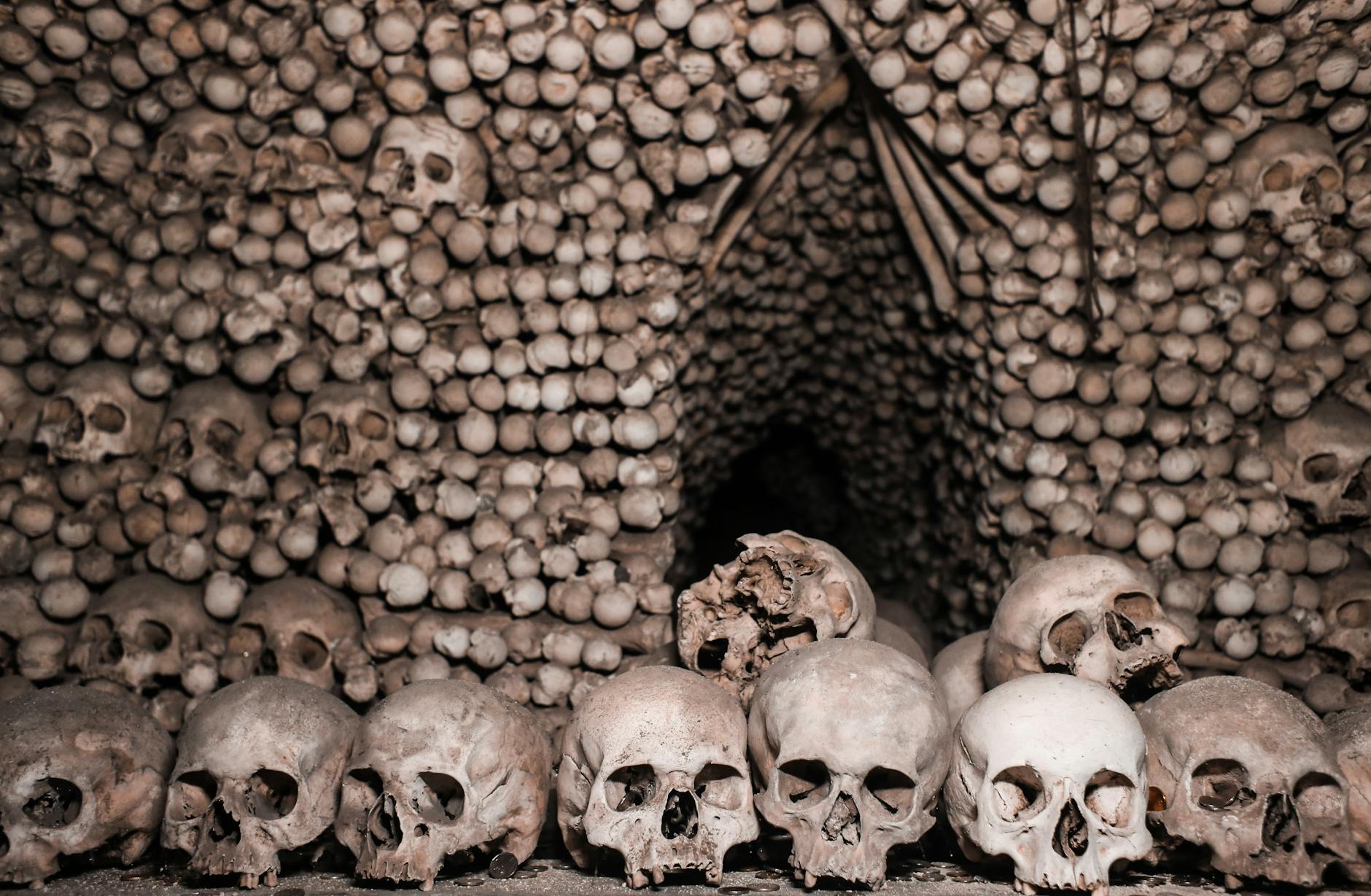
It might have something to do with Tumblr’s favorite bone-stealing witch
“PSA: tumblr user littlefuckinmonster is stealing human bones from cemeteries in Louisiana. Please don’t let them get away with this and spread the word/signal boost!” -tumblr user pastel-prouvaire
In July 2016, a witch named Ender Darling was taken into custody in Florida and returned to Louisiana. Their crime? Stealing human bones from cemeteries in the state.
The same year, Louisiana’s legislature passed the “Louisiana Human Remains Protection and Control Act,” a law intended to stop the ownership and sale of human remains within Louisiana. The question we must ask ourselves is this:
Was it legal to own human remains in Louisiana prior to 2016?
This question raises many others about the shockingly large amount of U.S. states that allow the ownership and sale of human remains, the lack of federal regulations on the subject, and why a Tumblr user thought selling bones on Facebook was a good idea.
A history of Louisiana bone law
“In Louisiana, bone trade isn’t illegal” -Ender Darling
To answer the first of our questions, we must examine the “Louisiana Unmarked Human Burial Sites Preservation Act.” This 1991 law makes it illegal to “Buy, sell, barter, exchange, give, receive, possess, display, discard, or destroy human skeletal remains from an unmarked burial site or burial artifacts.”
So, if the bones were sourced from an unmarked grave or from a cemetery containing unmarked graves, as earlier defined in the statute, the bones are illegal to own.
The state law surrounding the type of private bone ownership Darling practiced (bonership? No, maybe not bonership) appear to be as old as the witch in question, but this law doesn’t address our wider questions. It doesn’t punish or outlaw the ownership of remains sourced outside Louisiana by “legal means” or those obtained within the state prior to 1991. Let’s look earlier.
A 1974 statute (8.654) punishes “mutilating, disinterring human remains.” Frustratingly nonspecific, but that’s par for the course with graverobbing statutes.
Other states are more permissive of the sale and display of human remains, with less than 10 regulating the practice at all. Federal regulations don’t exist either. Most states either explicitly forbid practices like graverobbing or neither allow nor disallow the practice. This statutory absence doesn’t translate to legality, but it does make convictions more difficult. Given this general laxness, why is Louisiana different?
It seems as though the answer may be climate, both social and meteorological.
To knock the latter point off the list, the water table in Louisiana is high, meaning remains interred in the ground are susceptible to surfacing after heavy rain. This surfacing is in fact how Darling sourced their collection of bones and is a known problem in potters fields like Holt Cemetery, the supposed site of their theft. Many of the remains in Holt Cemetery are those of the poor and indigent, and most are not white. Those of means in the area are primarily buried in above-ground “oven crypts,” which do not flood. Whose remains are protected and whose are exploited is another conversation altogether, but it does tie into the cultural aspect of this area of Louisiana law and the wider conversation surrounding the ownership of human remains.
The Voodoo question
“Fucking ya’ll want to pretend that I’m not in New Orleans, where I have watched black voodoo [sic] priests break into crypts and steal random full bodies.” -Ender Darling
Upon researching this issue, the questions of Voodoo, Hoodoo and “root work” and their historical punishment under Louisiana law loom long. Is it possible that the ownership of human remains is so strictly regulated because of the historical practice of Voodoo and other African Diaspora religions in the state?
As far as my research has uncovered, no. (A side note, but my research also uncovered a 2009 law outlawing the creation of “human-animal hybrids. Curious.) It seems like bone law is more concerned with the persistent issue of human bones resurfacing after rain and the high quantity of unmarked graves than anything having to do with religious practices, whether that be wicca or Voodoo.
Note: Darling has referred to themselves as a “bruja” and has been labelled a white-passing person of color. I do not mean to imply their practice was wiccan in any way. While “witchcraft” may be a less inflammatory term for what they were doing, most witches disagree and call their actions “weird, rancid, illegal, and inexperienced” which of course, they were.
That’s not to say that Voodoo was never criminalized. New Orleans is the only municipality to outlaw the practice within its limits, and many women were arrested and tried for practicing the faith. They just weren’t punished under graverobbing statutes.
Louisiana is the only state in the U.S. to use a civil law system. This gives judges the final say in interpreting the law, and preceding case law is unimportant. The basis for this system is in the Napoleonic Code, rather than the English common law system preferred by the rest of the country.
This importance of judicial opinion allowed Voodoo practitioners to be punished for things like larceny, petty theft, or disorderly conduct at the discretion of white judges as a proxy for their religion. The most common charge was unlawful assembly, especially if enslaved people were present. This charge originates in the “Black Code,” an 1803 document classifying the rights of free and enslaved Black people in the state. That document has its roots in previous similar codes penned by the French and the Spanish during their colonization of the region.
Litigation surrounding ownership of gris-gris, totems, fetishes, or other markers of Voodoo is shaky. The main mechanism through which practitioners were punished was instead the illegality of their gatherings under the Black Code. These gatherings were uniquely threatening to white supremacy because of their ability to energize and mobilize the large Black population of the region. This, rather than any perceived desecration of graves or anti-Christian practices, made them a target.
Okay, let’s talk about Boneghazi
“But yeah. I’m knee deep in bodies, with a shovel eating and selling the bones. Sure. Whatever.” -Ender Darling
Stop me if you’ve heard this one before. In late 2015, a user of the private Facebook group “The Queer Witch Collective” posted an offer to ship human bones to other users for the price of shipping.
What a steal! Or, it would be, if that wasn’t very illegal. Ender Darling, the witch in question, was operating under the assumption that those in a group whose first and cardinal rule was “no shaming” wouldn’t criticize this post. And at first, few did.
Once criticism poured in, Darling doubled down. Reiterating many times that others should not shame them for their practice. The practice in question included walking through a cemetery later identified as Holt Cemetery (Darling denies that Holt is the site of their crimes) and picking up human remains that had washed up after rain.
Once they had the bones, they used them for what they call “curse work,” extoling the virtues of the remains and the ease of “connecting” with them. The offer may have been made out of a misguided attempt to support POC members of their community, but if any “sales” had been made, they may have constituted the illegal transport of stolen goods across state lines.
Many within the group were unhappy about the moderators’ initial support of Darling. The schism this created among the queer witches eventually led to the collapse of the group, though Darling had already left by then.
Attempts were made by the “bone-stealing witch” to justify their actions, both on Facebook and on Tumblr, where the story landed next. A truly iconic callout post was penned by pastel-prouvaire, discourse was had about whether the authorities had been or should be called (they had been), racist witchcraft was discussed at length, and many jokes were made at Darling’s expense. Once the drama, later dubbed “Boneghazi” kicked off, Darling deleted their original tumblr account.
After coming back on a second blog (fuckinheathen) to defend themselves and talk about the threats they had received as a result of the drama, Darling appeared to give up and deleted their second blog too. Mainstream media had gotten a hold of the story at this point, and Darling even gave an interview to The Advocate in an attempt to reframe the story.
It didn’t work, and nothing makes that more obvious than the fact their house was raided by police in January 2016. They were arrested on a minor drug charge and 15 bones were seized. Later, they were charged with “trafficking in human parts and burglary of a cemetery.”
Their offers of “honey and drink and flowers” don’t make their actions less illegal. Their insistence on a pact with “their goddess” doesn’t either. Even the later protestations that a man was “digging with a shovel and a backhoe tearing into old plots” doesn’t justify their actions. That man was likely reburying or moving the remains in accordance with the cemetery’s legal obligation under several statutes mentioned above.
It turns out, witchcraft isn’t a good legal defense. Darling couldn’t make bail and took a plea bargain, getting released for time served at the conclusion of their strange ordeal with the criminal justice system. By 2017, they had seemingly left the internet altogether. A fitting sendoff for a truly strange character. Farewell, tumblr user lilfuckinmonster. We knew ye perhaps too well.
The current state of Louisiana bone law
“Ya’ll wanna prented that occult leaders, ::cough the leader of the New Orleans chapter of the OTO cough:: aren’t actually breaking into graves to steal skulls and get body parts to practice their necromancy” -Ender Darling
So, what happened next, and what does this have to do with the future of Louisiana’s bones?
In 2016, the state legislature passed the “Louisiana Human Remains Protection and Control Act,” which some say was partially or entirely inspired by Darling’s ordeal. The act reads, in part:
“The legislature hereby finds that Louisiana law has never permitted, recognized, or sanctioned ownership rights in human remains and that such materials are explicitly exempted from property concepts under both common and civil law.”
This law is much less wordy than those discussed previously, and it demonstrates the general vibe in the Louisiana statehouse regarding human remains. Namely, that they’re not messing around.
Two acts are made explicitly illegal by this new law, and they’re very broad.
One outlaws the possession of human remains. Bad news for any aspiring Ender Darlings, and also much stricter than any other U.S. statute regarding the ownership of such remains.
The other is the prohibition of the trade in, discarding, or destruction of human remains. There goes every baby witch and morally-bankrupt funeral director’s get rich quick scheme.
Basically, if you find yourself in the state of Louisiana, you can take a cemetery tour, you can bring home souvenirs, but you can’t bring home souvenirs from a cemetery tour.
Happy Halloween.
Leave a Reply