Pulitzer had an uncanny ability to recognize news in what others ignored. He sent out reporters to mine the urban dramas his competitors consigned to their back pages. -James McGrath Morris, Man of the World
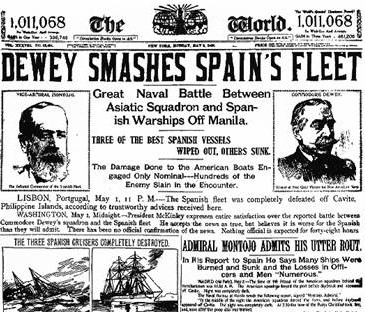
Despite his near-unmatched impact on the journalism of today, if one were to ask someone what Joseph Pulitzer did, they would either gesture vaguely to the prize that bears his name or mention something about yellow journalism and the Spanish-American War.
Not to discount the insane amounts of fearmongering perpetrated by the World in the early 20th century, but that last point is a bit reductive. Mr. Pulitzer loved a stunt, but his paper participated in a more subdued style of sensationalism in the 1880s.
Reporters’ work appeared under headlines bearing such gruesome imagery as “Baptized in Blood” or “Screaming for Mercy.” This approach was intended to capture attention at newsstands, and it worked. Readership of the World was around fifteen thousand in 1883, and by 1887, it had reached almost two hundred thousand.
Besides the work appearing on-page, Pulitzer staged attention-grabbing stunts like fundraising for the pedestal for the Statue of Liberty, something that, coupled with his grand declarations about “fighting for the common man,” positioned his enterprise as one championing American working-class values.
In short, Pulitzer believed in attention as the greatest possible form of currency, and structured his newspaper, his business dealings, and his own words in the interest of acquiring it. This laid the groundwork for not only the explosion of what we now call yellow journalism, but for stunt reporting as well.

What is stunt reporting?
Many things, but generally in the 1880s, it referred to a reporter (not always, but usually a young woman) who staged some sort of elaborate ruse or act in order to ferret out a story. Kim Todd cites a notable example of the genre as the work of Nora Marks, who pretended to faint in the street in order to be taken to the hospital. The uncomfortable ride to the hospital and the harsh treatment by doctors was highlighted in the piece, all in the service of advocating for the introduction of ambulances.
Without the attention-culture created by Pulitzer in the early days of his tenure at the World, writers staging stunts aimed at exposing the problems of society would not have had a platform to share their findings, making the stunts meaningless.
Sources
DEASY, ROBERT L. 1954. “The Journalistic Approach of Joseph Pulitzer’s New York World Toward “the Maine Affair”.”
MORRIS, JAMES McGRATH. “Man of the World.” The Wilson Quarterly (1976-) 34, no. 1 (2010): 28–33.
TODD, KIM. 2023. Sensational: The Hidden History of America’s Girl Stunt Reporters. Harper Perennial.
Leave a Reply