I paid the bill. $8.14 for the eyelashes and a cake of rouge, even after the 25-percent Bunny discount. I had refused to invest in darker lipstick even though “girls get fired for looking pale.” I wondered how much the Bunny beauty concession was worth to Mr. Mathews. Had beauty salons sent in sealed bids for this lucrative business? -Gloria Steinem, I Was a Playboy Bunny
Even though undercover exposés fell out of favor in the early 1890s, sensationalist stunt reporting continued apace until about 1900, when the practice was abandoned in favor of yellow, then objective journalism.
This may be due to several factors, such as the first journalism schools beginning operation in the early 20th century. In addition to that, publications began to utilize early codes of ethics for their reporters, requiring less sensationalism and more respectability.
Once the practice of stunt reporting was largely discontinued, it did not reappear until around the 1960s, where it once again picked up steam, especially in the realm of politics. One example of this kind of political subterfuge is Joe McGinniss’ The Selling of the President, which chronicled his time immersed (arguably undercover) in the Nixon campaign as a White House press agent.
Despite popularity with readers, the media establishment was not fond of the methods used by undercover reporters, which they considered to be dishonest. By the mid-1970s, a noted decline in undercover reports winning the Pulitzer Prize occurs, with public trust moving away from the practice, leaving it to languish in specialized publications and local papers. Television programs have made use of undercover reporting to great success, however, as the medium allows for greater integration of sensational entertainment and objective reporting.
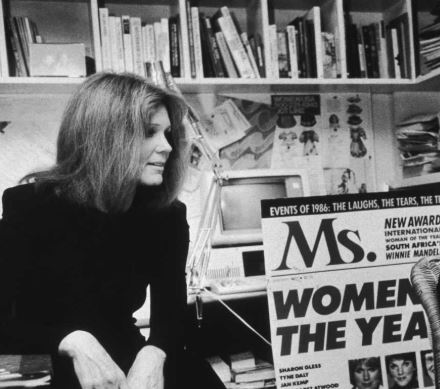
Perhaps the clearest successor to the work of Bly and Nelson is the undercover report I Was a Playboy Bunny by feminist scholar and activist Gloria Steinem. Like the stunt girls of Pulitzer’s newsroom, Steinem set out to expose unfair labor practices levied against women, though with a very midcentury bent.

If Nelson’s work was overly focused on the tangible cost of these exploitative jobs, Steinem’s is as well, mentioning the cost of makeup, costumes, and other trappings required by the job. If the women of Chicago’s garment factories were being subjected to sexual harassment in 1888, so were the bunnies of Hefner’s Playboy Clubs in 1963.
Steinem’s confessional, narrative style also echoes Bly, with her personal experience brought to the fore. The reader is invited to accompany Steinem to a harrowing and unnecessary gynecological exam, much like they accompanied Bly to Bellvue and to Blackwell’s Island.
I Was a Playboy Bunny is clearly inspired by the stunts of the 1880s, proving the tenacity of both sensationalist journalism and reporting focused on women’s issues. Both the factories of Nelson’s “Slave Girls” series and the Playboy Clubs were not technically breaking the law and given the fact their abuses were levied primarily at women, society turned a blind eye; that is until a woman found their way in and exposed their misdeeds to the public.
The last Playboy Bunny club didn’t close until the 1980s, but Steinem’s work, much like Bly and Nelson’s, fundamentally changed the way the facilities conducted themselves.
Sources
HEATH, BEN, ELIZABETH FAUE, and BROOKE KROEGER. 2023. Like a Comet Streaking across the Sky: The Investigative Journalism of Eva Valesh. KFAI Twin Cities.
PEKO, SAMANTHA, and MICHAEL S. SWEENEY. 2017. “Nell Nelson’s Undercover Reporting.” American Journalism 34 (4): 448–69.
LOGAN, DAVID. 1998. “’Stunt Journalism,’ Professional Norms, and Public Mistrust of the Media.” University of Florida Journal of Law & Public Policy 9 (2).
“I Was a Playboy Bunny.” Gender Issues and Sexuality: Essential Primary Sources, 2006.
TODD, KIM. 2023. Sensational: The Hidden History of America’s Girl Stunt Reporters. Harper Perennial.
Leave a Reply