By crafting long-form narratives that stretched over weeks and read like novels, stunt reporters changed laws, launched labor movements, and redefined what it meant to be a journalist. -Kim Todd, Sensational
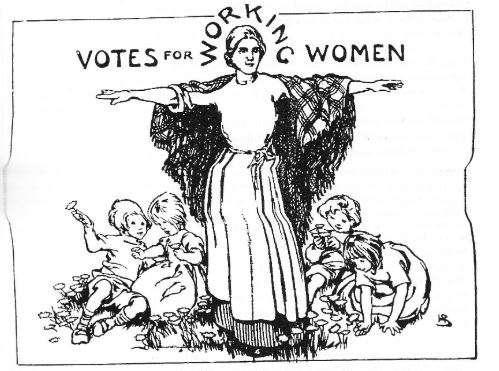
Although stunts were a reliable way for women to find their way into newsrooms, they also served a greater political purpose in the period. Prior to 1919, American women were unable to vote, meaning that politicians felt no need to take their concerns into account when forming policy.
For women in the 1880s, exposure was one of the only available methods of challenging ingrained systems of power. If enough people were talking about an issue because it had been splashed across the front page of a newspaper, it would be career suicide for a politician not to address it.
In this way, stunt girls created tangible societal change, despite the sensational or seemingly frivolous nature of their work. After Nellie Bly wrote her Blackwell’s exposé, the asylum was investigated by the state, and changes she suggested (such as universal locks) were implemented. Nell Nelson’s work in New York factories led directly to the passage of the Fassett Bill in 1890, which improved labor conditions for women and children.
While some women became reporters to agitate for societal change, there is no evidence of these lofty goals in Bly, Nelson, or the Sweet sisters.

Many were drawn to stunts because without them, they would be relegated to the society pages. Peko and Sullivan sum up the delicate situation of female reporters like this: “for the most part, “stunt girls” knew how to play their part, because while for men taking on a stunt was a choice, for women a stunt was the only way to avoid writing about society and gossip.”
By 1890, Nell Nelson had hung up her disguises, ending her undercover work and transitioning, like many other stunt girls, to more straightforward reporting tactics. For her part, Nellie Bly had stopped going undercover shortly after the Blackwell’s stunt because of her increasingly high-profile image.
In speaking about the demise of stunt reporting in the early 1890s, Bly biographer Brooke Kroeger notes that oversaturation of the market and the lack of available writers (many girls had left the field altogether for marriage or other less dangerous ventures) led to the overall abandoning of the practice.
The obvious feminist read of the legacy of stunt reporting is that women were forced to endanger themselves in order to earn a seat at the men’s table that was newspaper reporting, despite the almost equal gender demographics of newspaper readership at the time. These stunt girls were perhaps the bravest and best reporters of their time because their work held a mirror up to society and reflected its ugly inequalities back at it.
Sources
HEATH, BEN, ELIZABETH FAUE, and BROOKE KROEGER. 2023. Like a Comet Streaking across the Sky: The Investigative Journalism of Eva Valesh. KFAI Twin Cities.
LIGUORI, ERIC W. “Nell Nelson and The Chicago Times ‘City Slave Girls’ Series.” Journal of Management History. 18, no. 1 (2012): 61–81.
PEKO, SAMANTHA, and MICHAEL S. SWEENEY. 2017. “Nell Nelson’s Undercover Reporting.” American Journalism 34 (4): 448–69.
TODD, KIM. 2023. Sensational: The Hidden History of America’s Girl Stunt Reporters. Harper Perennial.
Leave a Reply