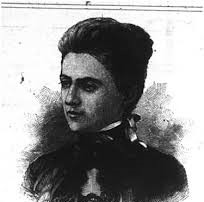
Certainly, at a national level, we have made much progress and the progress is owed to individuals like Nell Nelson and to the collective action she helped to inspire. -Eric W. Liguori, Nell Nelson and The Chicago Times “City slave girls” series
Once Nell Nelson made it to New York, she began writing for the World, with much of her work appearing in the evening edition of the publication. Like her work in Chicago, Nelson focused heavily on the plight of underpaid white women working in factories, though she began to include children in the scope of her reporting as well.
If Bly was brash, always attempting to outdo her own stunts and drawing readership with sheer force of personality, Nelson was the resolute activist, ending several of her articles with calls to action. Her background as a schoolteacher lent her the reputation as the more erudite of Pulitzer’s stunt girls, focusing heavily on the economic situation of her subjects.
Despite the reputation of the Evening World as Pulitzer’s less serious publication, Nelson was able to elevate it and herself by leveling well-researched accusations at those in power. As one writer from the period put it, “‘Nell Nelson’ was to the Evening World what ‘Nellie Bly’ was to the morning edition.”

There has not been a significant amount of scholarship done on Nelson’s impact on reporting, though she certainly set the stage for many other stunt girls who would tackle unfair labor practices in their work. By continuing to go undercover in New York factories, she kept her foot on the neck of robber barons, refusing to let them counter her work in any meaningful way.
Nelson may not have been an outright labor agitator like Eva Valesh, but her reach extended far outside the two cities she investigated in and her impact on organized labor has been consistently understated. According to Eric W. Liguori in his analysis of Nelson’s work, “Nell Nelson single-handedly exposed workplace atrocities severe enough to foster a collective social mood and motivation to organize and affect change, a process that individuals and organizations continue to this day.”
According to some accounts, after some time off in 1890, Nelson returned to the World as a foreign correspondent, finally retiring in the mid-1890s after marrying the editor of the Evening World.
Sources
LIGUORI, ERIC W. “Nell Nelson and The Chicago Times ‘City Slave Girls’ Series.” Journal of Management History. 18, no. 1 (2012): 61–81.
PEKO, SAMANTHA, and MICHAEL S. SWEENEY. 2017. “Nell Nelson’s Undercover Reporting.” American Journalism 34 (4): 448–69.
TODD, KIM. 2023. Sensational: The Hidden History of America’s Girl Stunt Reporters. Harper Perennial.
Leave a Reply