October 16, 2024
The “Pulitzer formula,” if there was one, was a story written so simply that anyone could read it, and so colorfully that no one would forget it. -James McGrath Morris, Man of the World
The New York World was not a publication many thought would survive the early days of the 1880s. By 1883, the struggling paper was floundering, left to die by its financier owner, Jay Gould. That is, until an Austrian immigrant by the name of Joseph Pulitzer bought it.
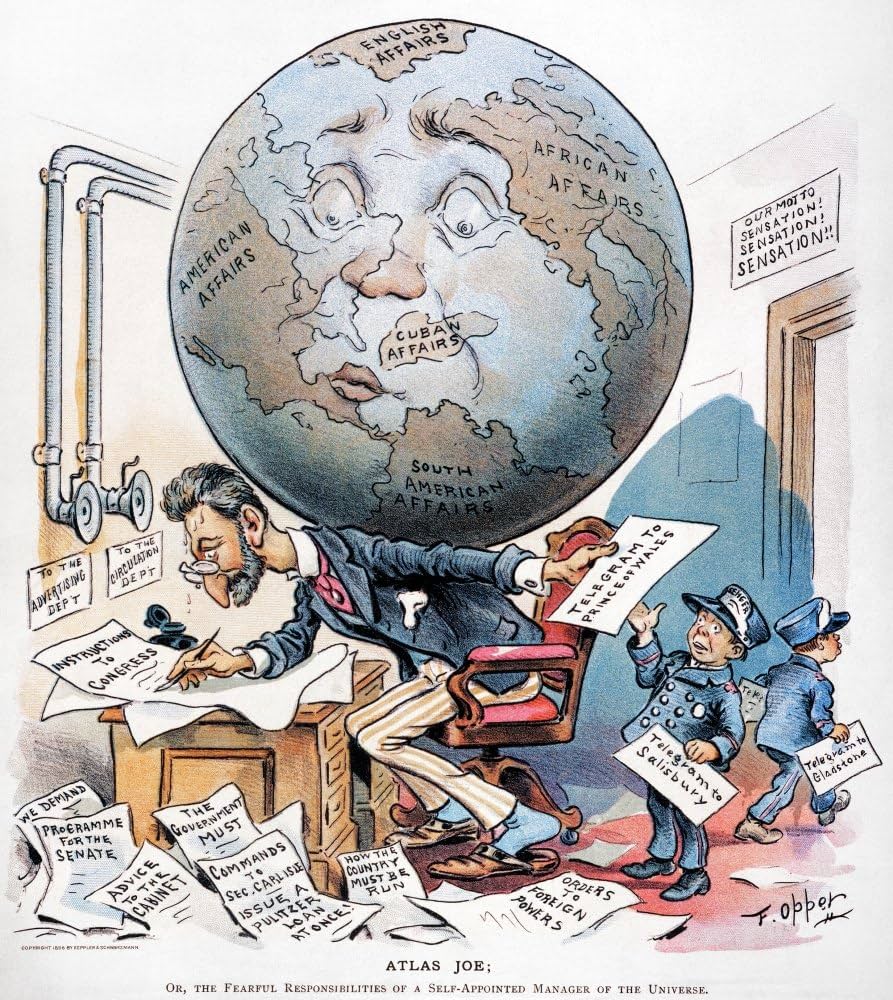
The man was the former owner of the St. Louis Post-Dispatch, and his zeal for accurate and sensational journalism would remain unmatched until W.R. Hearst stepped on the scene later in the decade.
Once Pulitzer got his hands on the paper, changes came quickly, and they would lead the way for the rest of the country, eventually changing reporting forever. This influence was not something he courted in the early days of his career, but he would come to crave it. His philosophy on reporting was to provide accurate information in a quantity sufficient enough to build reader trust, then direct those readers to the editorial pages, where he and his team of editors (many of whom were politicians) would provide their counsel on matters of society and politics.

Pulitzer’s editors were heavy-handed, crafting sensational headlines meant to lure readers to the copy, which became snappier and more structured under the owner’s strict guidelines. In writing about the style of reporting demanded by Pulitzer, William Inglis said: “Above all there must be… some headline that would leap forth in a challenge to the attention of anyone that glanced at it no matter how casually. And every chronicle of facts must tell why the thing that happened had happened.”
Interviews also became commonplace in the World, something theretofore unseen in high-profile New York journalism. Pulitzer’s reporters trawled the depths of the city, haunted courtrooms for human interest stories, and badgered sources for comment in a way described at the time as “insolent and impertinent.”
It is in these ways Pulitzer’s influence on journalism can most be felt. Newsrooms post-Pulitzer have operated mainly in the style of the World, with an editor’s guiding hand extending outside the editorial pages and publications retaining their tastes for the sensational. Headlines remain short, intended to draw reader attention in the same fashion as their 19th century counterparts. Reporters are still as insolent as they once were and the emphasis on attributed quotes, derived from Pulitzer’s insistence on interviews, remains present in modern journalism.
Sources
MORRIS, JAMES McGRATH. “Man of the World.” The Wilson Quarterly (1976-) 34, no. 1 (2010): 28–33.
DEASY, ROBERT L. 1954. “The Journalistic Approach of Joseph Pulitzer’s New York World Toward “the Maine Affair”.”
TODD, KIM. 2023. Sensational: The Hidden History of America’s Girl Stunt Reporters. Harper Perennial.
Leave a Reply